The Lexicon of a Bus Driver

If the first entry was about the architecture of how we sit, today is about the soundtrack of how we speak. Professor Matthews mentions that a creative writer uses dialogue even if they cannot remember every actual-factual word to create a palpable experience for the reader (Matthews 114). Standing near the boarding gate, the air is thick with a very specific, repetitive vocabulary.
"Step back from the yellow line." "Masks optional, respect personal space." "Transfers at the back, please."
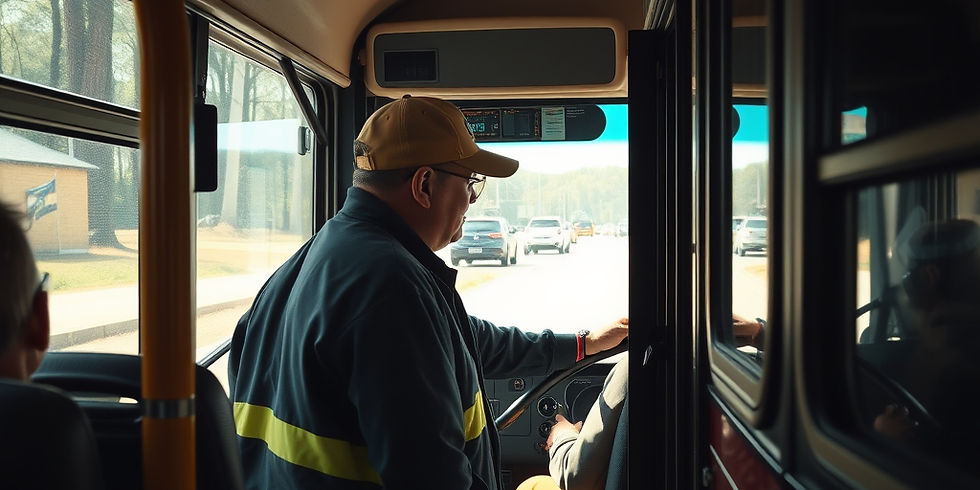
The bus driver has a voice like gravel hitting a tin roof. He does not look at the passengers; he looks at their tickets. There is a mechanical violence to the way the doors hiss open and shut, a sound that cuts through the low hum of the terminal (Matthews 112).
I am watching a teenager try to negotiate a fare. He is digging through his pockets, coming up with nothing but lint and a single crumpled dollar. The conflict here is immediate. The driver does not move. He just points to the sign: Exact Change Only.
This is where the lyric essay comes in. John D’Agata says that the paradox of language is that it is always evolving, yet the challenges we face are universal (D'Agata 132). This kid’s panic, the way his ears are turning red, the way he is glancing at the line forming behind him, is a universal truth of embarrassment.
I find myself wanting to zoom in on the driver’s face (Matthews 115). Is there a halo of light or just the fluorescent glare of the terminal? He finally sighs, a sound that says more than any textbook could about the exhaustion of a twelve-hour shift. He waves the kid through.
The resolution is not a grand cinematic moment; it is just the hiss of the air brakes and the boy disappearing into the dark interior of the bus. As Anne Lamott says, these are the scraps of life that tug on the sleeves of our hearts (Lamott 6). I am just trying to write them down before they drift away.
Works Cited
D’Agata, John. "We Might as Well Call it the Lyric Essay." ENG 211: Introduction to Creative Writing, 2025, pp. 129-132.
Lamott, Anne. "12 Truths I Learned from Life and Writing." TED, Apr. 2017, www.ted.com/talks/anne_lamott_12_truths_i_learned_from_life_and_writing.
Matthews, Araminta Star. "Introduction to Writing Creative Nonfiction: Hint—It’s Not What You Think." ENG 211: Introduction to Creative Writing, 2025, pp. 112-118.

Comments